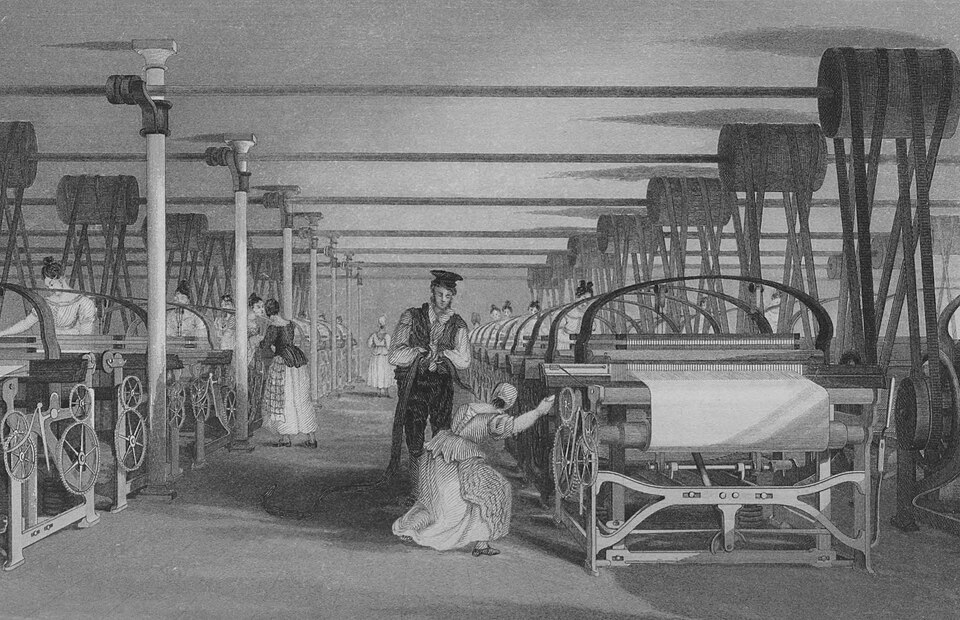
The Industrial Revolution began in Britain in the late 18th century, transforming the nation from an agrarian society into the world's first industrial power. Central to this transformation was the development of steam power, pioneered by James Watt, and the mechanisation of textile production through inventions like the spinning jenny and the power loom. Britain's abundant coal and iron resources, combined with its network of canals and later railways, created the perfect conditions for industrial growth.
Manchester, often called "Cottonopolis," became the epicentre of the cotton textile industry and the world's first industrial city. The city's population exploded from around 10,000 in 1717 to over 300,000 by 1851. Conditions in industrial cities were harsh — long working hours, child labour, and polluted environments were commonplace. Yet the Industrial Revolution also spurred innovation in transport (Stephenson's Rocket), communication (the telegraph), and social reform, eventually leading to workers' rights and public health legislation.
By the mid-19th century, Britain was producing two-thirds of the world's coal and half of its iron and cotton cloth. The Great Exhibition of 1851 in London's Crystal Palace showcased British ingenuity to the world. The Industrial Revolution not only reshaped Britain's economy and landscape but also set the stage for global industrialisation, making Britain the "workshop of the world" and leaving a lasting legacy on modern society.