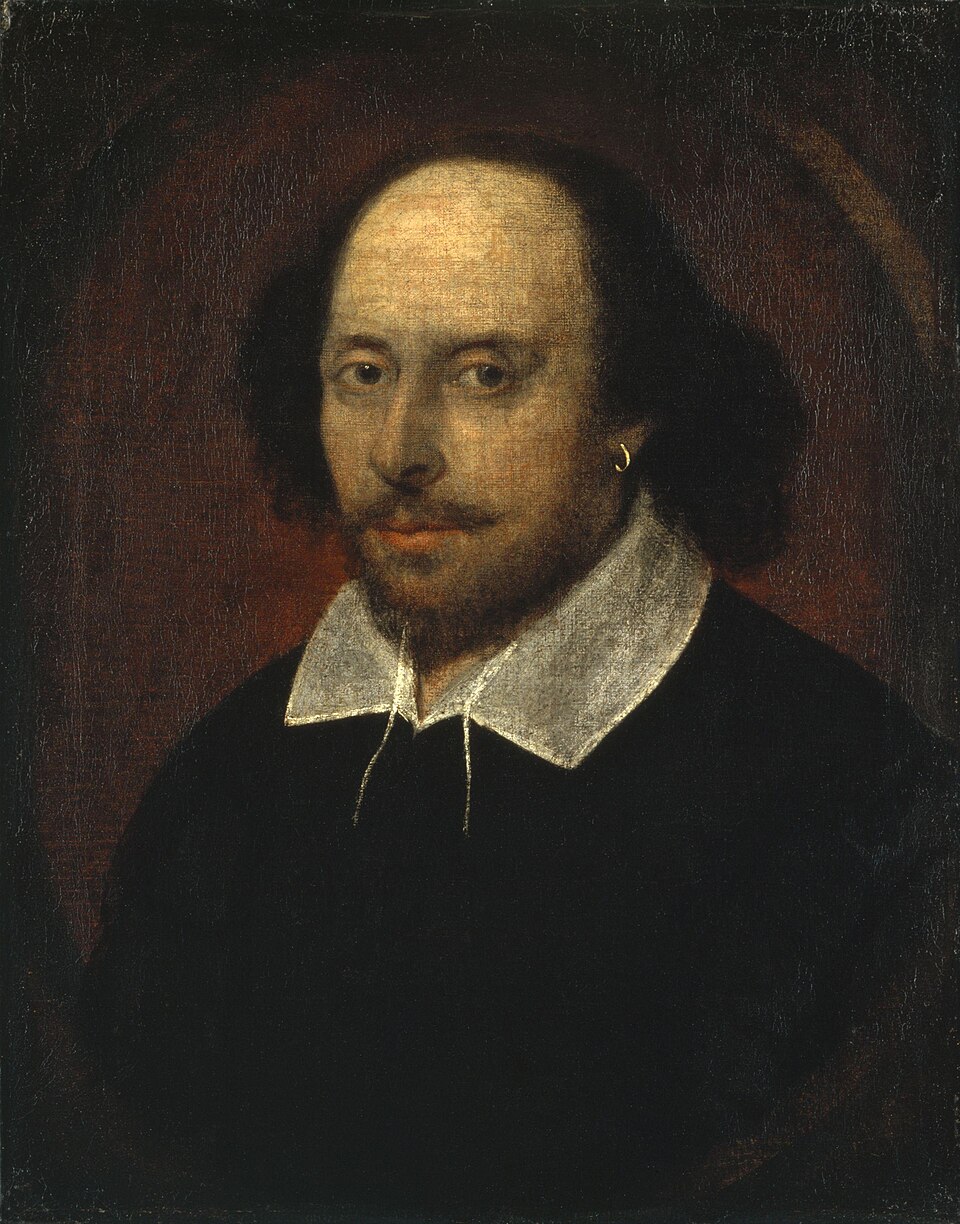
William Shakespeare (1564–1616) is widely regarded as the greatest writer in the English language and the world's pre-eminent dramatist. Born in Stratford-upon-Avon to John Shakespeare, a glove-maker and alderman, and Mary Arden, he was educated at the King's New School, where he studied Latin and classical literature. At 18, he married Anne Hathaway, with whom he had three children. By the early 1590s, he had established himself as an actor and playwright in London, becoming a shareholder in the Lord Chamberlain's Men — later the King's Men — who performed at the Globe Theatre.
Shakespeare's body of work includes 39 plays, 154 sonnets, and two long narrative poems. His plays span comedies (A Midsummer Night's Dream), histories (Henry V), tragedies (Hamlet, Macbeth, King Lear), and romances (The Tempest). He invented or first recorded over 1,700 English words, including "bedroom," "lonely," "gloomy," "hurry," and "fashionable." Phrases he coined — "break the ice," "wild goose chase," "heart of gold," "all that glitters is not gold" — remain part of everyday speech. His works explore timeless themes of love, power, jealousy, betrayal, and the human condition.
Shakespeare died on 23 April 1616 at the age of 52 and was buried at Holy Trinity Church in Stratford. Seven years after his death, colleagues John Heminges and Henry Condell published the First Folio, collecting 36 of his plays, without which many — including Macbeth, Julius Caesar, and The Tempest — would have been lost. Today, Shakespeare's works are performed more often than any other playwright's, translated into every major language, and studied worldwide. The reconstructed Globe Theatre on London's South Bank and his birthplace in Stratford-upon-Avon attract millions of visitors annually.